Where this storyline stands
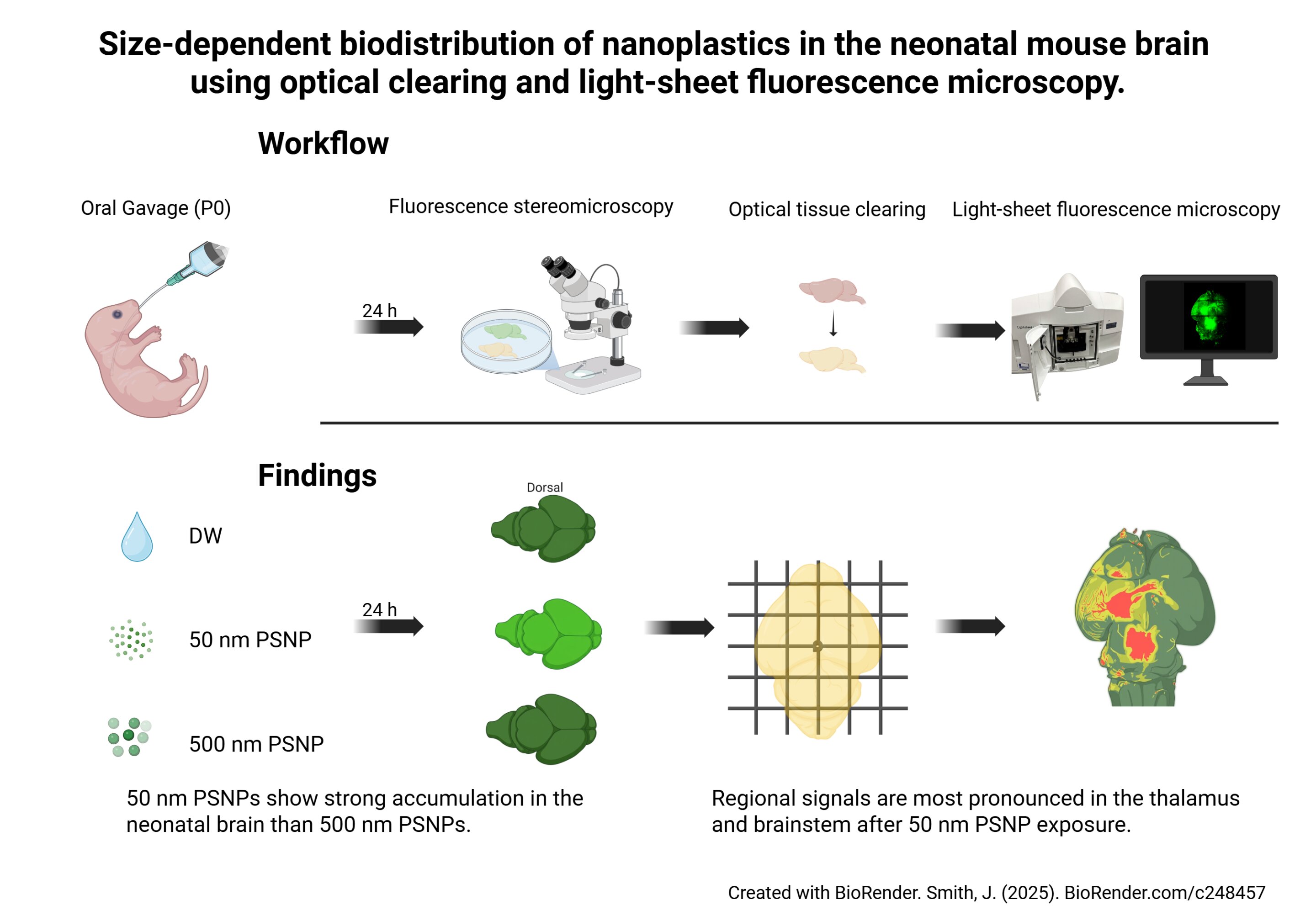
Nanoplastics—plastic particles smaller than one micrometer—are generated through the degradation and abrasion of plastic products and are increasingly detected in food, drinking water, air and biological tissues. Although the presence of plastic particles in animals and humans is well-established, determining how nanoplastics are distributed within complex organs, such as the brain, remains challenging.
Complete chronological journey
Every chapter below is ordered by its exact event time, from the earliest connected report to the newest development.
- 01How it started01 — How it started
Three-dimensional visualization of nanoplastic distribution in the neonatal mouse brain
What happened
Nanoplastics—plastic particles smaller than one micrometer—are generated through the degradation and abrasion of plastic products and are increasingly detected in food, drinking water, air and biological tissues. Although the presence of plastic particles in a Three-dimensional visualization of nanoplastic distribution in the neonatal mouse brain
Why it matters
The development may affect how technology is built, regulated or used. The practical impact depends on technical details, availability and independent evaluation.
SourcesPhys.orgphys.orgRead the connected article →